-
Thank you GreyGeek, I had not read about it anywhere. Just registered. I am logged in, but clicking on wiki and manual is not taking me anywhere. I will try again.Leave a comment:
-
Everything you wanted to know about VPN's but didn't know where to ask!.Leave a comment:
-
Another reason!
And to those of you who say, “Forget Facebook, we’ll do without it,” I say no. I am sick and tired of the suppression of our speech. We are unable to engage in the public square. And yes, Facebook is the public square; it’s where we connect. We have to fight for it. Shouting into the wilderness is not freedom of speech.Leave a comment:
-
Here is another explanation I found:
A list of ZeroNet pages, or zites, starts here, but you have to install ZeroNet to see them because the links begin with the loopback address!ZeroNet
ZeroNet is a decentralized network of peer-to-peer users. It is built in Python and fully open source. Sites have specific addresses which can be accessed through a browser when using its client. ZeroNet is not anonymous by default, but users can hide their IP address by using the built in Tor-functionality. ZeroNet uses Bitcoin cryptography and the BitTorrent network.
Users can publish static or dynamic websites into ZeroNet and visitors automatically serve the visited website from their computer, with the option to stop serving the website at any time by either pausing or deleting it. Sites will remain online even if it is being served by only one peer.
When changes are published by the site owner, connected nodes serving that site (previous visitors) will receive the updates done to the site's content.
ZeroNet comes with a built-in SQL database. This makes content-heavy site development easy. The database is also synced with hosting nodes.
The existence of peer-to-peer online websites had been hypothesized for some time, with The Pirate Bay suggesting they would build such network, as well as BitTorrent Inc. which created the closed source Project Maelstrom. One other similar project is MaidSafe, though it has not yet seen widespread use, and has been said to focus more on file storage.
At my current level of understanding of ZeroNet, which is barely above nothing, I'd be inclined to run it inside a VB guest OS, or chroot it, or perhaps firejail.Last edited by GreyGeek; Aug 01, 2016, 08:51 PM.Leave a comment:
-
I found yet another P2P system called "ZeroNet".
A reddit post describes the difference between it and IPFS:
Here is how to install it:Zero Net will probably have some IPFS support in the future. Zero Net acts more like a database/website and IPFS acts more like file storage.
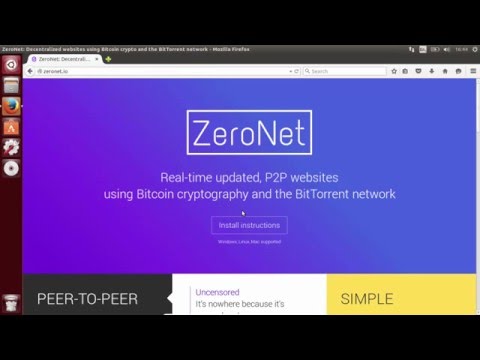
and here is a proxy address which you can look at in your browser without having to install Zeronet.
https://proxy1.zn.kindlyfire.me/1HeLLo4uzjaLetFxxxxxxxxxxxxxxx
ZeroNet allows access to onion websites as well. The latest ZeroNet documentation is here.
IF I understand the docs correctly then with ZeroNet I eventually become a server for all the content of all the sites I visit! If that is true then I need a FAST machine with a TB drive and more than 1GB of Internet bandwidth from my ISP. I hope I am wrong, otherwise this seems too impractical.What is ZeroNet?
ZeroNet uses Bitcoin cryptography and BitTorrent technology to build a decentralized censorship-resistant network.
Users can publish static or dynamic websites into ZeroNet and visitors can choose to also serve the website. Websites will remain online even if it is being served by only one peer.
When a site is updated by its owner, all nodes serving that site (previous visitors) will receive only the incremental updates done to the site content.
ZeroNet comes with a built-in SQL database. This makes content-heavy site development easy. The DB is also synced with hosting nodes with incremental updates.
...
Features
- Easy, zero configuration setup.
- Password-less BIP32 based authorization: Your account is protected by the same cryptography as your Bitcoin wallet.
- Real-time updated sites.
- Namecoin .bit domains support.
- SQL Database support: Allows for easier site development and faster page load times.
- Anonymity: Full Tor network support with .onion hidden services instead of ipv4 addresses
- TLS encrypted connections.
- Automatic, uPnP port opening.
- Plugin for multiuser (openproxy) support.
- Works with any browser/OS.
...
How does it work?
- After you install and run ZeroNet, you open a site by visiting: http://127.0.0.1:43110/{zeronet_site_address} (eg. http://127.0.0.1:43110/1HeLLo4uzjaLe...PMwFP3qbRbTf3D).
- ZeroNet will then use the BitTorrent network to find peers that are seeding the site and will download the site content (HTML, CSS, JS...) from these peers.
- Each visited site becomes also served by you.
- Every site contains a list of all files used in the site in a SHA512 hash and a signature generated using the site owner private key.
- If the site owner modifies the site, then he/she signs a new list and publishes it to the peers. After the peers have verified the files list integrity (using the signature), they download the modified files and publish the new content to other peers.
Last edited by GreyGeek; Aug 03, 2016, 05:43 AM.Leave a comment:
-
Here is why we need a national and international P2P.
https://stream.org/how-google-facebo...conservatives/Leave a comment:
-
Hard to say. There have been a gazzilion P2P networks arise over the years and they've either failed due to lack of users or they'be been sued out of existence. Here is a video demonstrating it:Originally posted by dequire View Post
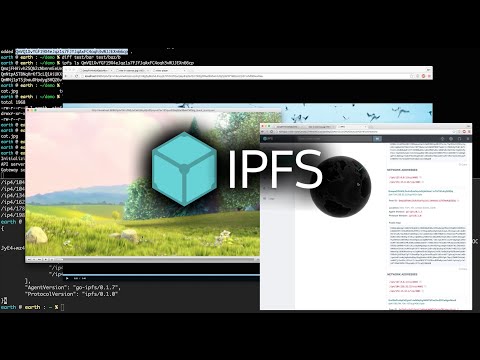
I've got the IPFS firefox extension which, when firefox is connnected to the IPFS gateway, tells me how many peers I'm connected to, gives me my home page, my peer list, my files and my configuration.
. Last night I started with the 4 base peers and within an hour I had 72. I did the "ipfs diag net" command and got hashes for nearly 43,000 connections ("servers"), which I captured in a text file that is 3.5Mb. Connections are both ipv4 and ipv6. My SIXXS tunnel is seen as a native IPv6 connnection and is very fast. Using either the CLI or the "http://localhost:5001/ipfs/<your 2048 byte hash ID goes here>/#/" in FireFox's URL presents a browser connection to your connected peers. Everything and everybody is identified by a 2048 byte hash key and one does a lot of cut and pasting of hash keys to access files, pics and videos. It allows the creation of snapshots, both locally and on some peer somewhere (could be your own remote server) much like Btrfs's snapshots.
Here is a screen shot show the peers connected to my ID.
It will take some getting used to. With those hashes you really can't tell who you are connected to. You will need a photographic memory or a local database that tuples the human identity of the server, directory, or file with its 2048 byte hash so that you find known stuff. Browsing and posting like you were on Drudge, Facebook or G+ isn't there yet. It reminds me of the old BBS bulletin board service.Last edited by GreyGeek; Jul 31, 2016, 08:15 PM.Leave a comment:
-
Alternatives to online censorship
Please keep us posted on your experiences there. My guess is it will take a while to gain traction, but it could prove to be an invaluable asset down the road. Maybe even sooner than later!Originally posted by GreyGeek View Post
- If you have copied text output that contains formatting (colors, highlighting, etc.), please do not enclose it in QUOTE or CODE tags. Just right-click your mouse and choose "Paste Without Formatting" or similar (Paste as plain text).


Leave a comment: