Announcement

Collapse
No announcement yet.

Old computers did it better

Collapse
This topic is closed.
X
X
 
  • Filter
  • Time
  • Show
Clear All
new posts

  • vinnywright
    replied
    Hummm ,,,,lets see ,,,,,if I remember right ,,,,my first computer was (my moms old work computer from the DOD-Navy) a aptivia ,,,,aptiva ?

    intel copermine 150MHz CPU overclocked to 183MHz

    lightspeed-128 graphics

    4 slots for 72 pin sims that I had 96MB of RAM crammed into.

    it had win95 on it that I replaced with win98 and I think DSL (dam small linux) and I think I got Slackware running on it for a minute befor deciding it was time to get an upgrade ,,,,,,,,, an HP with a 800+MHZ CPU and about 800MB RAM ,,,,,,,,,,OOoooo smoking

    VINNY

    Leave a comment:


  • Buzzstpoint
    replied
    My 1st machine was an Amstrad PC 8088, 2 5 1/4 floppies, 20 meg hard card, and upgraded to ram...
    Oh those were the time... MSDos 3.2.. Also had Gemstart OS, but rarely used it...

    Leave a comment:


  • MoonRise
    replied
    On a personal level, maybe not, but I've used both.

    Leave a comment:


  • GreyGeek
    replied
    Originally posted by Qqmike View Post
    The issue here is the use case! Users have--or feel they have--more elaborate uses for their personal computing systems nowadays. Simple uses => simpler systems of the old days.

    Yeah, if you knew what you were doing, perhaps you could replace ICs on the old board. Nowadays, costs are low; you can replace the whole darned board in a heartbeat, especially with standardized plug-connectors to the board.
    User case indeed.
    However, most people these days use laptops and replacing parts on them is a quagmire, if possible at all. For example: on older laptops the plastic connectors connecting the keyboard to the motherboard are very tiny and the snaps become very brittle. More often than not they break into pieces both on the board and on the ribbon, making further replacement problematic. Another problem is getting parts for some laptops. There is a huge used parts business but many of the vendors are in China, or equally shady, and what you get may be a defective part or an empty box. This is why I stopped helping people by repairing their old laptops. For most, it is more worthwhile to get a new or semi-used medium or low performance laptop for around $300 - $400. Don't need much more to browse or email.
    Last edited by GreyGeek; Apr 30, 2016, 09:35 AM.

    Leave a comment:


  • elijathegold
    replied
    The Vic20 was my first and you can't compete with that

    Leave a comment:


  • MoonRise
    replied
    VIC20 was more challenging and limiting programming wise. I'd choose C64 any day over the VIC20.

    Leave a comment:


  • elijathegold
    replied
    I agree with GreyGeek; I wouldn't want to go back to a Commodore 64 either but a VIC20 on the other hand would be just wonderful!

    Leave a comment:


  • Qqmike
    replied
    The issue here is the use case! Users have--or feel they have--more elaborate uses for their personal computing systems nowadays. Simple uses => simpler systems of the old days.

    Yeah, if you knew what you were doing, perhaps you could replace ICs on the old board. Nowadays, costs are low; you can replace the whole darned board in a heartbeat, especially with standardized plug-connectors to the board.

    Leave a comment:


  • MoonRise
    replied
    Enjoyed it! There is a nostalgia about buying and using a computer that is lost nowadays!

    Leave a comment:


  • life0riley
    replied
    Thanks for posting this! I enjoyed watching this too.

    Leave a comment:


  • GreyGeek
    replied
    But it leaves out so much and glosses over faults.

    For example, no software programs unless you programmed them yourself. VisiCalc was the first commercially available app that was really universally available. I sold a lot of Apples because of it. Prior to it I wrote software, mainly GAAP software for farmers in order to create my own Apple ][+ market.

    Most people do NOT know how to program, even BASIC, because they have little understanding of math, Boolean logic, matrix algebra and such. And, until Borland released its "lunchbox" database toolkit for TurboPascal 3.02A, slow and cumbersome ASCII flat files were the only data containers available, and they were limited by RAM or Floppy Disk size. Using cassette tape drives were slow. My grade book program and data took FIVE minutes to load. Barely enough time between classes to do that. The 5.25" Disk ]['s were much faster but your data was limited to 125kb of data and software. I had two Disk]['s and I stored programs on one and data on the other.

    Because of my knowledge of math, indices and matrices I was able to write a wrestling match scoring program for 248 teams, rank the results and print them out on a Panasonic 749 line printer at 60 cps. My ninth grade son ran that program at the State Championship Wrestling Tournament in 1980. I watched the matches. Nebraska NeTV (PBS) featured him running the program during one of their reports and my phone started ringing off the hook. I gave that program to Norm Manstead, the Clarks wrestling coach who had asked if I could write such a program because of the errors created when a table of twelve scorers got the referee ticket and passed it down the row. Skipping errors, copying errors, math errors, recording errors, ranking errors. His match was the 16 Team Clarks Invitational Wrestling Tournament. In those days, because of Manstead, Clarks was a class D wrestling powerhouse and teams which did well in that tournament usually did well at the state meet. He marketed it for 15 years using his reputation to sell it.

    The computer revolution in public education which I expected to happen after the introduction of the Apple and RadioShack computers did not happen. There was a lot of talk about Plato educational software and how it would revolutionize learning. AI turned out to be far more difficult than people thought, and it became obvious that the PC at that time didn't have the speed or storage capacity. Right now, on smartphones like this iPhone6+ with several thousand times the CPU speed of the 1MHz Apple 6502 and and a million times the RAM, Siri is NOT able to understand most of the questions posed to "her" and she has the help of Apple's mainframes. I marketed a peripheral device for Apple and IBM computers called SAVVY. It was a self-learning algorithm which had an adaptive pattern recognition capability which, with a typed question, was far more accurate in giving a correct response. Usually around 100%. You could ask "Give me a printout of all my customers who live in zipcodes 12345 and 12346 and who owe more than $50". And it would. Now, if you know SQL, the exact name of the database and its fields, you could enter a select command to do the same thing. But not in 1983.

    Putting Linux on an EPROM (so you could update it) on the mobo would give you a relatively fast bootup but in the day I'd leave my Linux box up 24/7/365 so bootup time was insignificant. Uptime was important if you ran servers. So was stability. Now, stability and security are King.

    Go go back to the days of Commedore and Apple ][? Hardly
    Last edited by GreyGeek; Apr 16, 2016, 06:54 PM.

    Leave a comment:


  • NickStone
    Guest started a topic Old computers did it better

    Old computers did it better

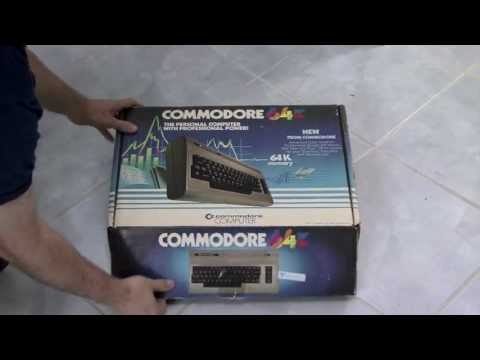
    I enjoyed watching this. It's so true.

    Last edited by Guest; Apr 14, 2016, 11:26 PM.

Users Viewing This Topic

Collapse

There are 0 users viewing this topic.

Working...
X